2017 Summer School in Computational
Sensory-Motor Neuroscience
(CoSMo 2017)
(CoSMo 2017)
Sponsors
NIH (R25)Brain Canada Foundation
CAPnet
NSF (DREAM)
Organizers
Gunnar Blohm (main)Konrad Körding (co-main)
Paul Schrater (co-main)
Advisory committee
Paul CisekErik Cook
Doug Crawford
Jody Culham
Lee Miller
Doug Munoz
Eric Perrault
Kurt Thoroughman
Links
Blohm labKörding lab
Schrater lab
Centre for Neuroscience Studies

Welcome
We are pleased to announce the 2017 Summer School in Computational Sensory-Motor Neuroscience (CoSMo 2017).
 This unique summer school focuses on
computational techniques integrating the multi-disciplinary
nature of sensory-motor neuroscience through combined
empirical-theoretical teaching modules and
makes use of databases of movement data (NSF CRCNS). Major
breakthroughs in brain research have been achieved through
computational models. The goal of the Summer School in
Computational Sensory-Motor Neuroscience is to provide
cross-disciplinary training in mathematical modelling
techniques relevant to understanding brain function,
dysfunction and treatment. In a unique approach bridging
experimental research, clinical pathology and computer
simulations, students will learn how to translate ideas and
empirical findings into mathematical models. Students will
gain a profound understanding of the brain’s working
principles and diseases using advanced modelling techniques
in hands-on simulations of models during tutored sessions by
making use of data / model sharing. This summer school aims
at propelling promising students into world-class
researchers.
This unique summer school focuses on
computational techniques integrating the multi-disciplinary
nature of sensory-motor neuroscience through combined
empirical-theoretical teaching modules and
makes use of databases of movement data (NSF CRCNS). Major
breakthroughs in brain research have been achieved through
computational models. The goal of the Summer School in
Computational Sensory-Motor Neuroscience is to provide
cross-disciplinary training in mathematical modelling
techniques relevant to understanding brain function,
dysfunction and treatment. In a unique approach bridging
experimental research, clinical pathology and computer
simulations, students will learn how to translate ideas and
empirical findings into mathematical models. Students will
gain a profound understanding of the brain’s working
principles and diseases using advanced modelling techniques
in hands-on simulations of models during tutored sessions by
making use of data / model sharing. This summer school aims
at propelling promising students into world-class
researchers.Dates: July 30 - August 13, 2017
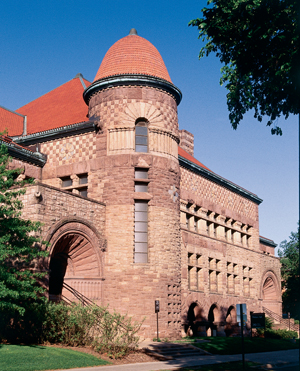
Location: University of Minnesota, Minneapolis, MN, USA
| Deadlines: |
- April 11, 2017:
Application due, including letters of reference |
| - April 25, 2017:
Notification of acceptance & scholarships |
|
| - May 9, 2017: Attendance confirmation of applicants and registration payment |
 The summer school
will last for 2 weeks (including Saturdays). Attendants will
become familiar with fundamental modelling techniques and
their applications to sensory-motor neuroscience. These
techniques will be embedded into teaching modules linking
theory, empirical findings and clinical applications in
areas such as decision making, limb motor control,
sensory-motor transformations and motor learning. There will
be a mixture of lectures and hands-on Matlab programming and
simulation sessions aimed at solidifying the concepts taught
in the lectures. The latter are in the format of tutorials
supervised by the lecturers and local faculty/postdocs. In
addition, there will be 2-week long cross-disciplinary
research projects focussing on data / model sharing where
students can apply the newly acquired knowledge. Students
will work in small groups during the tutorial sessions and
2-week projects. An effort will be made to match up students
with and without mathematical and/or programming
backgrounds. We also offer professional development sessions
to complement the academic scope of CoSMo. Finally,
participants will have the opportunity to meet one-on-one
with lecturers of their choice for career advice, project
discussion, etc.
The summer school
will last for 2 weeks (including Saturdays). Attendants will
become familiar with fundamental modelling techniques and
their applications to sensory-motor neuroscience. These
techniques will be embedded into teaching modules linking
theory, empirical findings and clinical applications in
areas such as decision making, limb motor control,
sensory-motor transformations and motor learning. There will
be a mixture of lectures and hands-on Matlab programming and
simulation sessions aimed at solidifying the concepts taught
in the lectures. The latter are in the format of tutorials
supervised by the lecturers and local faculty/postdocs. In
addition, there will be 2-week long cross-disciplinary
research projects focussing on data / model sharing where
students can apply the newly acquired knowledge. Students
will work in small groups during the tutorial sessions and
2-week projects. An effort will be made to match up students
with and without mathematical and/or programming
backgrounds. We also offer professional development sessions
to complement the academic scope of CoSMo. Finally,
participants will have the opportunity to meet one-on-one
with lecturers of their choice for career advice, project
discussion, etc.This summer school is directed at graduate students and post-doctoral fellows from multi-disciplinary backgrounds, including Life Sciences, Psychology, Computer Science, Mathematics and Engineering. We will also accept highly motivated outstanding under-graduate students. There are no formal prerequisites, but knowledge in calculus, linear algebra, neuroscience and the Matlab simulation environment is expected. Enrollment will be limited to 40 participants.
CoSMo 2011, CoSMo 2012, CoSMo 2013, CoSMo 2014, CoSMo 2015 and CoSMo 2016 have been a tremendous success!
The school is organized by Drs Gunnar Blohm, Paul Schrater and Konrad Körding, the Canadian Action and Perception Network (CAPnet), the Queen's University Centre for Neuroscience Studies (Kingston, ON, Canada), the University of Minnesota Psychology Department (Minneapolis, MN, USA) and the Rehabilitation Institute of Chicago (IL, USA). It receives funding from NIH through an R25 grant within the Brain Initiative and matching funds from the Brain Canada Foundation.
 |
 |
 |